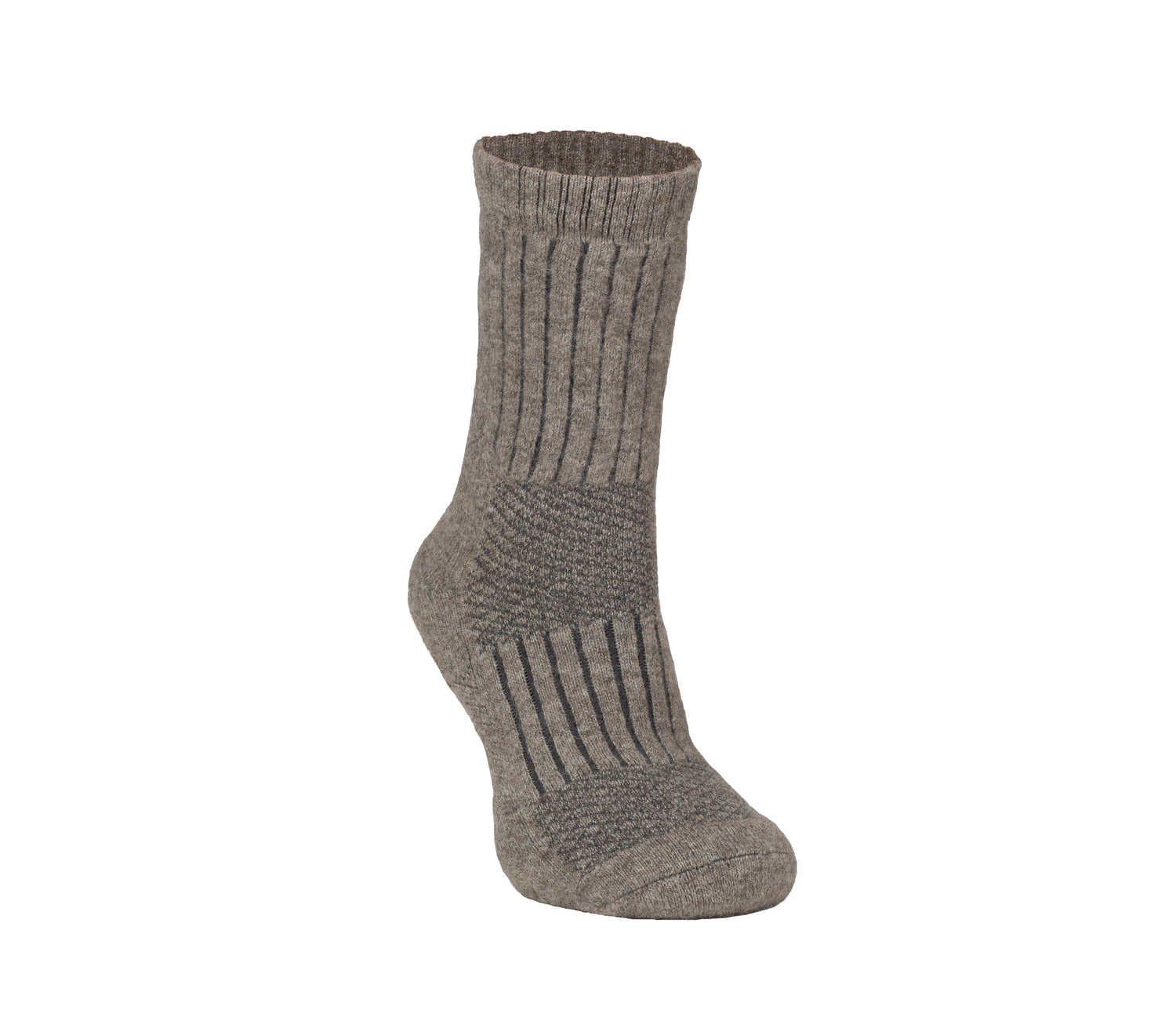


The Warmest Socks: Yak vs Alpaca vs Merino vs Cotton
Share
We sell two of the fibers in this comparison, so read it with that in mind. But we would rather tell you which of our own fibers is warmer than sell you the wrong one, so here is the honest version.
The warmth ranking
| Fiber | Warmth per weight | Fineness | Wet performance | Odor |
|---|---|---|---|---|
| Yak down | Warmest — 44% above merino | 14–17 microns | Wicks 66% better than sheep wool | Naturally resistant |
| Baby alpaca | Very high | About 21–23 microns | Wicks well | Naturally resistant |
| Merino wool | High — the baseline | Varies by grade | Wicks well | Naturally resistant |
| Cotton | Low | Not comparable | Holds water against skin | Poor |
Yak down wins on warmth per gram. Alpaca is close behind and silkier. Merino is the familiar benchmark and a good fiber. Cotton is not a cold-weather material at all, and this is the single most consequential line in the table.
Why the thickest sock is usually the coldest choice
Warmth in footwear comes from trapped air, and your boot has a fixed amount of room. Stuff a thick sock into a boot sized for a thin one and three things happen: the insulating air gap is squeezed out, the sock's loft is compressed, and your circulation is restricted. Less blood flow to your toes means colder toes, no matter what the sock is made of.
This is the entire practical argument for a fine, warm fiber. A thin yak or alpaca sock leaves room in the boot and still runs warm. A thick synthetic sock fills the boot and makes your feet colder. If your feet are cold in heavy socks, going thinner is often the fix, which sounds wrong until you try it.
Why cotton is the real problem
Cotton absorbs moisture and holds it against your skin. Water conducts heat away from your body far faster than air does, so a damp cotton sock actively cools your foot for as long as you wear it. Feet sweat even in the cold, especially on the walk in. Every wool-family fiber above moves that moisture away instead. If you change one thing before winter, get cotton out of your boots.
What about itch?
Itch is mostly a function of fiber diameter — coarse fibers bend less and poke the skin. Yak down at 14–17 microns is in cashmere's range and does not itch. Baby alpaca carries little to no lanolin, the oil in sheep's wool responsible for most wool reactions, so people who cannot wear merino often wear alpaca comfortably. Merino varies by grade: fine merino is comfortable, cheap merino can scratch.
How to choose
- All-day cold with little movement — stationary work, ice fishing, a hunting sit: yak, in a weight your boot has room for.
- Active cold — winter hiking, shoveling, walking the dog: yak or alpaca, lighter weight.
- Everyday winter wear — office, errands, travel: baby alpaca, for the softness.
- Cannot tolerate wool — start with alpaca, then try yak.
- Any cold-weather use — not cotton.
Carry a spare pair. Swapping to dry socks after the walk in is the cheapest warmth you will ever buy.
Shop Yak Cashmere · Shop Alpaca Socks · Our guide to yak wool · How to judge an alpaca sock
Common questions
What are the warmest socks you can buy?
By warmth per unit of weight, yak down leads the common natural fibers — roughly 44% warmer than merino wool — followed by baby alpaca, then merino. Cotton is last and should be avoided in the cold.
Are thicker socks warmer?
Only if your boot has room for them. A thick sock in a snug boot compresses the insulating air gap and restricts circulation, which makes feet colder rather than warmer.
Is yak warmer than alpaca?
Yes, per unit of weight. Alpaca is silkier and slightly cooler, which makes it the better everyday sock; yak is the choice for sustained cold.
Why do my feet get cold in wool socks?
Usually moisture or fit. Damp socks cool the foot, and a sock too thick for the boot restricts blood flow. Start with a dry pair and a weight that leaves room to wiggle your toes.