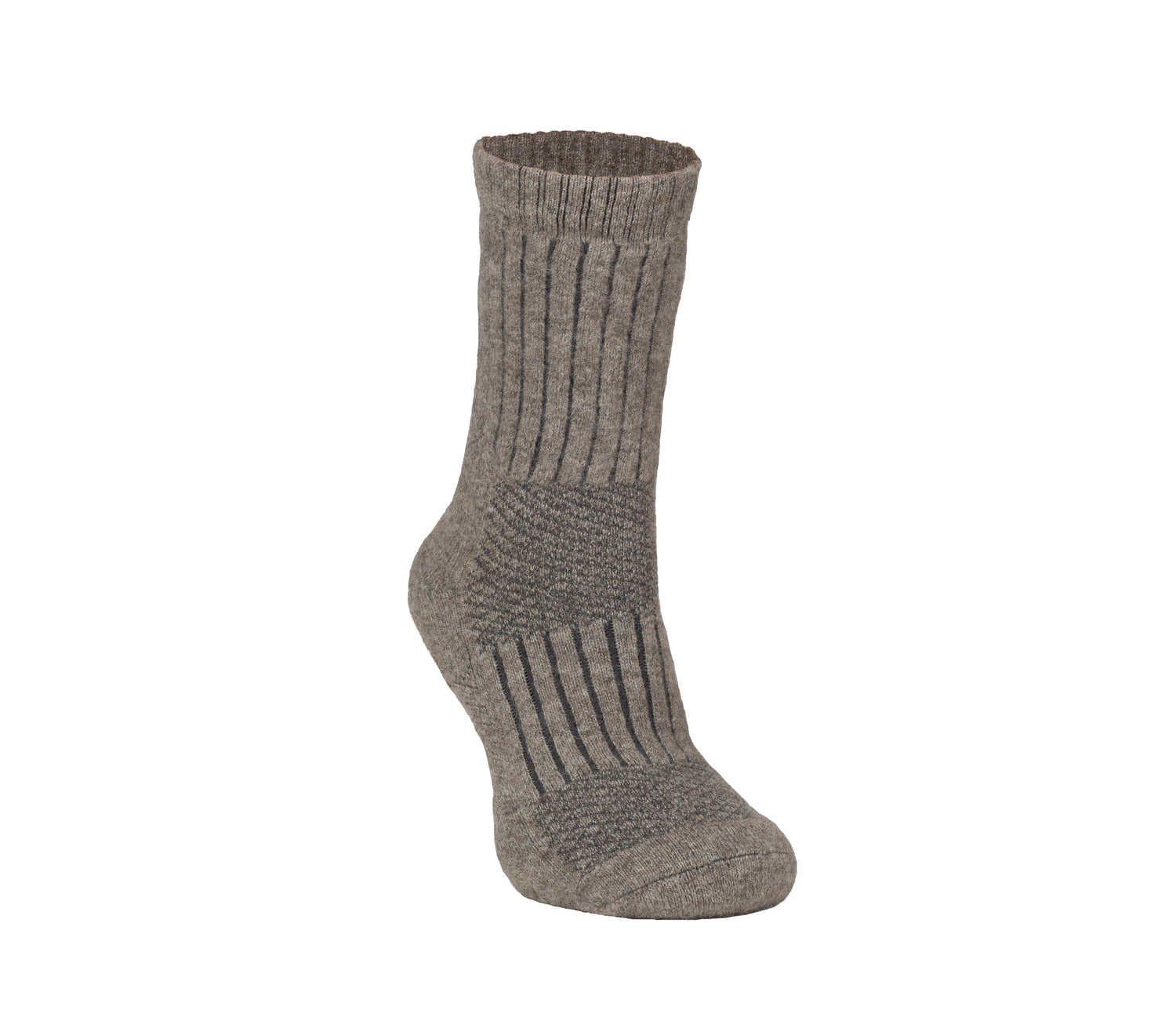


Best Alpaca Socks: How to Choose a Pair That Lasts
Share
Search "best alpaca socks" and you get lists ranking brands, usually by who pays the most commission. That does not help you when the pair in your hand is not on the list. So here are the five things that actually separate a good alpaca sock from a bad one. Judge any pair, including ours, against them.
1. What grade of alpaca is it?
Alpaca fleece is graded by fineness, and the finest grade is called baby alpaca. It does not come from baby animals — it is the softest fleece an adult alpaca produces, typically around 21–23 microns. A sock listed as "alpaca" without a grade is usually a coarser grade, and you will feel the difference on bare skin. If the listing does not say, ask.
2. What percentage is actually alpaca?
This is where most "alpaca socks" disappoint. A sock needs some nylon or elastane to hold its shape and survive a washing machine — 100% alpaca would bag out and wear through fast. That is normal and good. What is not good is a sock that is 8% alpaca, 70% acrylic, and marketed on the alpaca. Read the fiber content. If alpaca is not in the top two by percentage, you are buying a synthetic sock with a marketing story.
3. How is it built?
Fiber is half the sock. Construction is the other half:
- Reinforced heel and toe — these are the two places socks die. If they are not reinforced, the pair is short-lived regardless of fiber.
- A ribbed cuff that grips — a sock that slides into your boot all day is useless no matter how warm it is.
- Arch support and flex zones — the difference between a sock that stays put on a hike and one that bunches under your arch.
- Flat toe seam — a bulky seam is what you feel at mile eight.
4. Is the weight right for the boot?
The most common cold-feet mistake is buying the thickest sock available. A thick sock crammed into a boot compresses, kills the air gap that insulates, and restricts circulation — so your feet end up colder than they would be in a thinner sock. This is why alpaca and yak are worth paying for: both are warm enough per gram that a sock thin enough to leave room in your boot still runs warm. Match the weight to the boot you own, not to the temperature you fear.
5. Does the seller know where the fiber came from?
Good alpaca comes from Peru and Bolivia, much of it from smallholder herding families, and sellers who source it directly tend to say so specifically. Vague "ethically sourced" language with no country, region or supply chain named usually means the seller bought finished socks from a trading company and does not know either.
Alpaca vs. merino vs. cotton, briefly
| Alpaca | Merino | Cotton | |
|---|---|---|---|
| Warmth per weight | Very high | High | Low |
| Itch | Minimal — little to no lanolin | Low to moderate | None |
| Wet performance | Wicks moisture | Wicks moisture | Holds it against skin |
| Odor resistance | Good | Good | Poor |
| Durability | High | Moderate | Low |
Cotton is the one to avoid in cold weather outright. It absorbs moisture and holds it against your skin, which is exactly how feet get cold.
Where our socks land
We use baby alpaca grade, blended for durability rather than sold as 100% alpaca, with reinforced heels and toes. We also sell yak cashmere, which is finer still at 14–17 microns and runs 44% warmer per weight than merino — so if warmth is your only criterion, yak wins and we will tell you so. Alpaca is the silkier, slightly cooler option and the better everyday sock.
Shop Alpaca Socks · Shop Yak Cashmere · Alpaca socks for hunting
Common questions
Are alpaca socks worth the money?
If you are replacing cotton socks for cold-weather use, yes — the warmth-per-weight and odor resistance are a real functional difference, and a well-built pair outlasts several cheap ones. If you want a cheap sock for the gym, no.
Do alpaca socks shrink?
They can felt if you wash hot or tumble dry hot. Cold wash, gentle cycle, lay flat to dry.
Are alpaca socks good for sweaty feet?
Yes. Alpaca wicks moisture off the skin rather than holding it, and it resists odor better than synthetics.
Is baby alpaca from baby alpacas?
No. It is a fineness grade describing the softest fleece an alpaca produces.