Best Socks for Working Outside in Winter

What keeps your feet warm through a ten-hour day in the cold, by trade.
The cold that ruins a winter workday usually isn't the 8°F wind at 7 a.m. It's the damp sock at 2 p.m. Your feet sweat all day inside insulated boots, the sock soaks it up, and wet fiber stops insulating. By afternoon you're standing on a frozen deck or a concrete slab in what amounts to a cold compress.
So the best winter work sock isn't the thickest one. It's the one that stays warm when it's damp, dries between shifts, and holds up to a boot that's on your foot for ten hours.
Why your feet get cold at work
Three things work against you on the job that don't apply on a weekend walk:
-
Sweat with nowhere to go. Insulated and waterproof work boots keep water out, but they also keep moisture in. A sock that can't manage that moisture is wet by lunch.
-
Conduction through the sole. Standing still on a cold surface (a roof deck, a slab, a bucket truck floor, packed snow) pulls heat out of your feet faster than cold air does.
-
In-and-out cycling. HVAC techs go from a 120°F attic to a 15°F rooftop in the same hour. Your feet sweat in the heat, then that moisture chills you outside.
The fix for all three is the same: a natural fiber that insulates when damp, in a fit that doesn't crush the insulation out of it.
What to look for in a winter work sock
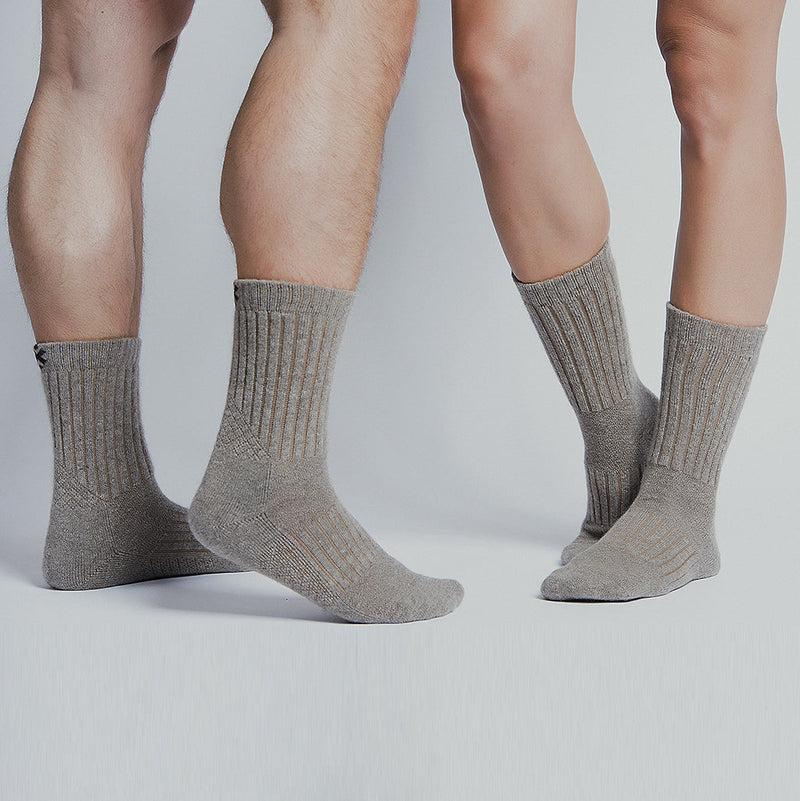
Fiber first. This matters more than thickness. Cotton is the worst choice for cold work: it holds water against your skin and loses almost all its warmth when wet. Synthetics dry fast but insulate poorly and get rank by day two. Wool-family fibers (merino, alpaca, yak) keep insulating when damp and resist odor.
Fit over bulk. A sock that's too thick for your boot gets compressed, and compressed fiber traps less air, so it's colder, not warmer. It also cuts circulation. If your boot was sized for a medium sock, wear a medium sock. We go deeper on this in The Warmest Socks: Yak vs Alpaca vs Merino vs Cotton.
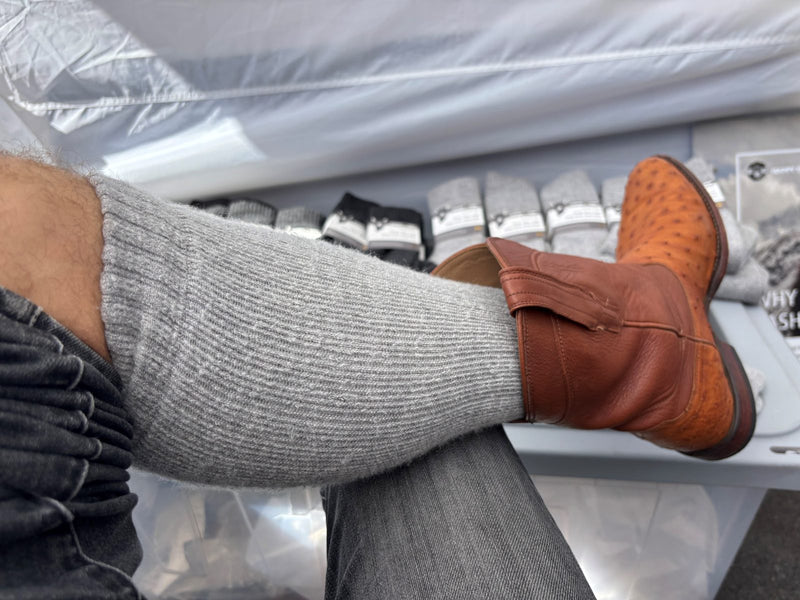
Height above the boot collar. The sock should clear the top of your boot by at least an inch. Crew height works for most work boots; tall pac boots and snow boots need over-the-calf so the collar never rubs bare skin.
Cushion where you stand. Padding under the heel and ball of the foot also adds a layer between you and a cold surface.
Built to rotate. One pair, worn every day, never fully dries. Plan on enough pairs to rotate.
Work sock fibers compared
|
Fiber |
Warm when damp |
Odor resistance |
Feel |
Best for |
|---|---|---|---|---|
|
Cotton |
Poor |
Poor |
Soft until wet |
Summer only |
|
Synthetic (poly/acrylic) |
Fair |
Poor |
Slick |
Short, high-sweat jobs |
|
Merino wool |
Good |
Good |
Soft |
General cold work |
|
Baby alpaca |
Very good |
Very good |
Very soft, no itch |
All-day cold work, sensitive skin |
|
Yak cashmere (down) |
Excellent |
Very good |
Cashmere-soft |
Coldest days, standing still |
Yak down runs 14 to 17 microns, finer than most merino, which is why it feels like cashmere and still insulates hard. Baby alpaca is the workhorse: warm, durable, soft, and easier on the budget.
The best work socks by trade
HVAC. You're in attics, crawlspaces, basements and on rooftops, often in the same call. You need a sock that handles sweat in the heat and stays warm on the roof. Wear the Baby Alpaca Crew daily and The Purists on the coldest rooftop days. See the HVAC kit.
Roofing. Cold decks, constant flexing at the ankle, and no warm truck to duck into for hours. Conduction through the sole is the enemy. The Purists Yak Cashmere give maximum warmth in a thin profile that won't crowd a fitted boot. See the roofing kit.
Construction. Steel or composite toes, long days, slab and frozen ground. Durability and rotation matter most. The Baby Alpaca Crew 3-Pack means you're never wearing yesterday's pair. See the construction kit.
Snow removal. Overnight shifts, tall boots, snow packing against your shins, and long stretches in a plow before jumping out to shovel. The Baby Alpaca Over-the-Calf keeps the boot collar off your skin. See the snow removal kit.
Utilities. Hours standing still on a line, in a bucket, or in a trench. Low movement means low body heat at the feet. Over-the-Calf for tall boots, The Purists when it's below 20°F. See the utilities kit.
[CREW QUOTE PLACEHOLDER: one or two sentences from an ARR tech on what changed after switching socks. Name, role, years in the field. Replace before publishing.]
How many pairs you need
Natural fiber needs about a day to fully dry and recover its loft. Wear a pair on Monday, give it Tuesday off. For a five-day week:
-
Minimum: 3 pairs, rotated, washed midweek.
-
Better: 6 pairs. A full week plus a dry spare in the truck. The Crew 6-Pack covers it.
The spare in the truck is the cheapest warmth upgrade there is. Swap at lunch on a sweaty day and your afternoon feels like your morning.
Five mistakes that make work feet colder
-
Doubling up socks. Two layers in a fitted boot compress each other and cut circulation. One good sock beats two average ones.
-
Cotton liners. A cotton liner under a wool sock still holds sweat against your skin.
-
Putting on socks in a cold truck. Keep tomorrow's pair inside, not in the cab overnight.
-
Re-wearing a damp pair. Even slightly damp fiber starts the day behind.
-
Lacing too tight for warmth. Tight laces restrict blood flow, and blood flow is what warms your feet.
Taking care of them
Work socks take a beating, but most damage happens in the laundry, not the boot. Cold wash, no fabric softener, and keep them out of a hot dryer. Full instructions: How to Wash Alpaca Socks Without Ruining Them.
Outfitting a whole crew?
If you run a shop or a crew, cold feet cost you in slower afternoons and guys sitting in the truck. We set up team orders for HVAC, roofing, construction, snow removal and utility crews. Get a team quote.
FAQ
What are the warmest socks for working outside?
Yak cashmere is the warmest per ounce, followed closely by baby alpaca. Both stay warm when damp, which matters more on the job than raw warmth on paper.
Are wool socks okay with steel-toe boots?
Yes. Pick a medium thickness so the toe box isn't crowded. A cramped toe is a cold toe.
Will alpaca socks hold up in work boots?
They will if you rotate pairs and wash them cold. Most early wear comes from wearing the same pair daily and machine-drying on high heat.
Do natural-fiber socks smell after a long shift?
Much less than cotton or synthetic. Wool-family fibers resist odor buildup, which is why you can rotate instead of washing after every wear.
What socks should I wear in snow boots?
Over-the-calf. Snow boots are tall, and a crew sock leaves skin exposed to the boot collar and packed snow.